
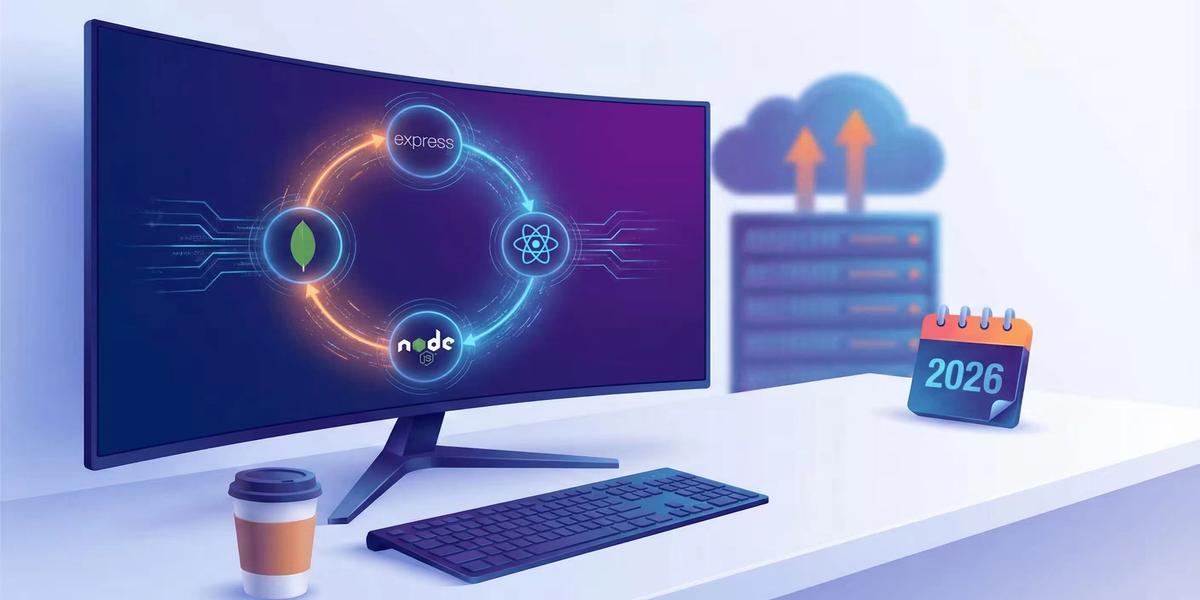
The MERN stack (MongoDB, Express.js, React, Node.js) continues to be one of the most popular technology stacks for building modern web applications. However, building a scalable, maintainable MERN application requires more than just knowing the technologies—it demands understanding of architecture patterns, best practices, and modern development techniques.
Why MERN Stack Remains Relevant
The MERN stack offers several compelling advantages:
- JavaScript Everywhere: Use a single language across your entire stack
- Rich Ecosystem: Access to millions of npm packages
- Active Community: Extensive documentation and community support
- Performance: Non-blocking I/O and efficient data handling
- Flexibility: Suitable for everything from MVPs to enterprise applications
Architecture Patterns for Scalability
1. Layered Architecture
Organize your backend into distinct layers:
- Controllers: Handle HTTP requests and responses
- Services: Contain business logic
- Data Access Layer: Manage database operations
- Models: Define data schemas and validation
This separation of concerns makes your code more maintainable and testable.
2. Microservices Approach
For larger applications, consider breaking your monolith into microservices:
- User Service: Authentication and user management
- Product Service: Product catalog and inventory
- Order Service: Order processing and fulfillment
- Payment Service: Payment processing
Each service can be developed, deployed, and scaled independently.
Database Design Best Practices
Schema Design
MongoDB's flexibility doesn't mean you should skip schema design:
- Use Mongoose schemas for data validation
- Index frequently queried fields for performance
- Denormalize strategically for read-heavy operations
- Normalize when necessary to avoid data duplication
Connection Pooling
Implement proper connection pooling to handle concurrent requests efficiently:
- Set appropriate pool size based on your load
- Monitor connection usage
- Implement connection retry logic
- Use connection timeouts
API Design Principles
RESTful Best Practices
- Use proper HTTP methods: GET, POST, PUT, PATCH, DELETE
- Implement versioning:
/api/v1/users
- Return appropriate status codes: 200, 201, 400, 404, 500
- Use pagination for large datasets
- Implement rate limiting to prevent abuse
Error Handling
Create a centralized error handling middleware:
- Consistent error response format
- Proper logging for debugging
- User-friendly error messages
- Stack traces only in development
Frontend Architecture
Component Structure
Organize your React components effectively:
- Atomic Design: Atoms, molecules, organisms, templates, pages
- Feature-based: Group components by feature
- Smart vs Dumb: Separate container and presentational components
State Management
Choose the right state management solution:
- Context API: For simple global state
- Redux Toolkit: For complex state with time-travel debugging
- Zustand: Lightweight alternative to Redux
- React Query: For server state management
Performance Optimization
Backend Optimization
- Implement caching with Redis for frequently accessed data
- Use compression middleware for response payloads
- Optimize database queries with proper indexing
- Implement pagination to limit data transfer
- Use CDN for static assets
Frontend Optimization
- Code splitting with React.lazy and Suspense
- Lazy loading for images and components
- Memoization with useMemo and useCallback
- Virtual scrolling for long lists
- Bundle optimization with tree shaking
Security Best Practices
Authentication & Authorization
- Use JWT for stateless authentication
- Implement refresh tokens for better security
- Hash passwords with bcrypt (minimum 10 rounds)
- Use HTTPS everywhere
- Implement CORS properly
Input Validation
- Validate on both client and server
- Sanitize user inputs to prevent XSS
- Use parameterized queries to prevent SQL injection
- Implement rate limiting on sensitive endpoints
Testing Strategy
Unit Tests
- Test individual functions and components
- Use Jest for JavaScript testing
- Aim for 80%+ code coverage
- Mock external dependencies
Integration Tests
- Test API endpoints
- Use Supertest for HTTP testing
- Test database operations
- Verify error handling
End-to-End Tests
- Test complete user flows
- Use Cypress or Playwright
- Automate critical paths
- Run in CI/CD pipeline
Deployment & DevOps
Containerization
Use Docker for consistent environments:
- Create multi-stage builds for optimization
- Use docker-compose for local development
- Implement health checks
- Optimize image sizes
CI/CD Pipeline
Automate your deployment process:
- Continuous Integration: Run tests on every commit
- Continuous Deployment: Auto-deploy to staging
- Environment Variables: Use .env files properly
- Monitoring: Implement logging and error tracking
Monitoring & Maintenance
Application Monitoring
- Use PM2 for process management
- Implement logging with Winston or Morgan
- Track errors with Sentry or similar
- Monitor performance with New Relic or DataDog
- Set up alerts for critical issues
Database Monitoring
- Monitor query performance
- Track slow queries
- Monitor connection pool usage
- Set up automated backups
Real-World Example: E-commerce Platform
Here's how we structure a production MERN e-commerce application:
Backend Structure:
- Authentication service with JWT
- Product catalog with MongoDB
- Order processing with queue system
- Payment integration with Stripe
- Email notifications with SendGrid
Frontend Features:
- Server-side rendering with Next.js
- Global state with Redux Toolkit
- Real-time updates with Socket.io
- Image optimization with Cloudinary
- Analytics with Google Analytics
Common Pitfalls to Avoid
Not handling errors properly: Always implement comprehensive error handling
Ignoring security: Security should be built-in, not bolted-on
Poor database design: Plan your schema before coding
No testing: Tests save time in the long run
Premature optimization: Profile before optimizing
Tight coupling: Keep components loosely coupled
No documentation: Document your API and architecture
Conclusion
Building scalable MERN stack applications requires careful planning, adherence to best practices, and continuous learning. By following the patterns and practices outlined in this guide, you'll be well-equipped to build robust, maintainable applications that can grow with your business needs.
Remember that scalability isn't just about handling more users—it's about maintaining code quality, developer productivity, and system reliability as your application evolves.
Ready to build your next MERN stack application? Our team at CodBizz specializes in creating scalable, production-ready web applications. Contact us for a free consultation on your project.


